
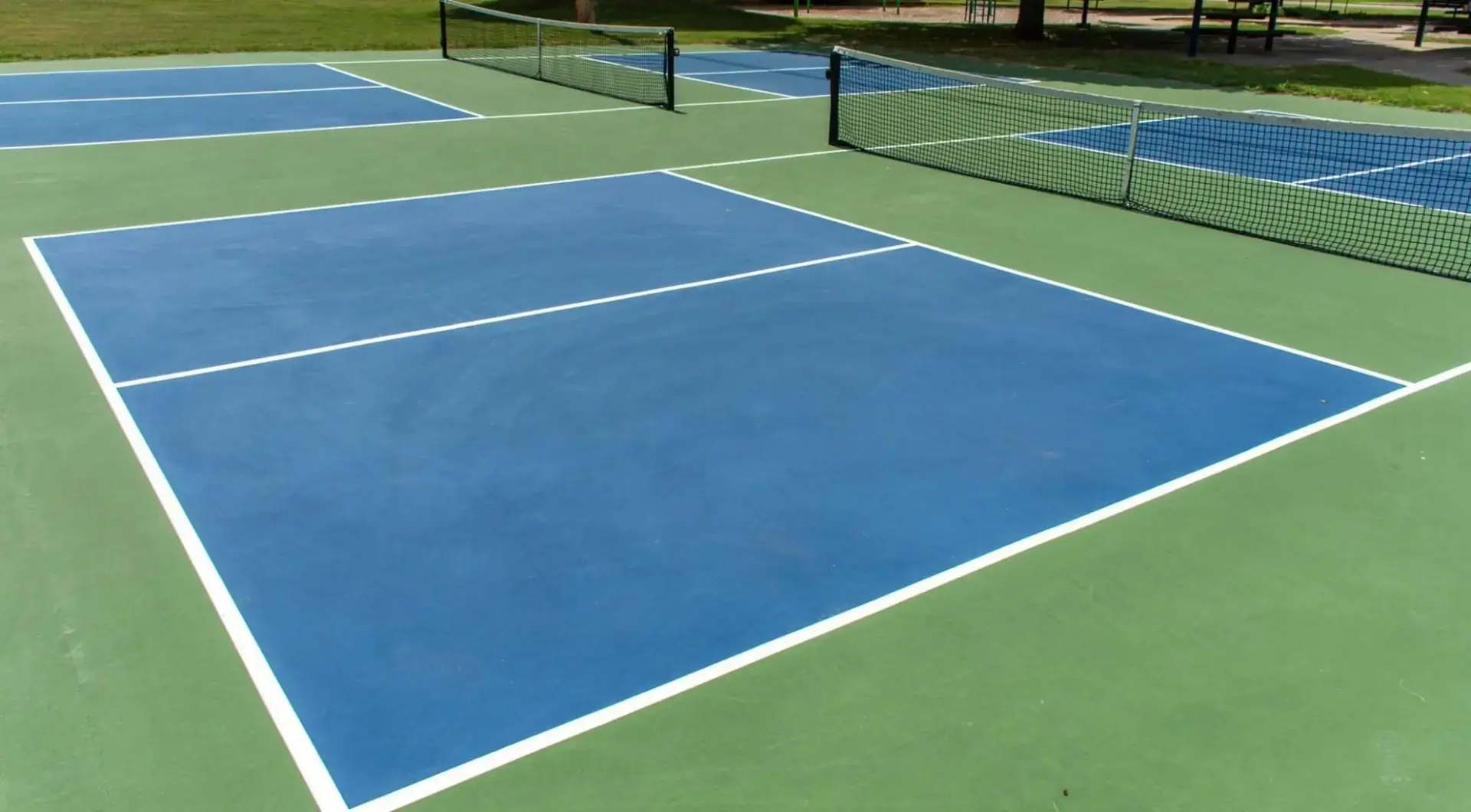
Court Resurfacing & Repair
Cleaning, crack repair, low-spot patching, new acrylic color coats and restriping for existing courts.
Acrylic court surfaces wear down from sun, water and play. Once the coating wears through, water gets into the pavement and cracks spread faster. Resurfacing on a regular cycle protects the asphalt or concrete underneath.
Every resurfacing job starts with an inspection for cracks, low spots, loose coating and drainage problems. The scope is based on what we find.
Facility types
- Tennis courts
- Pickleball courts
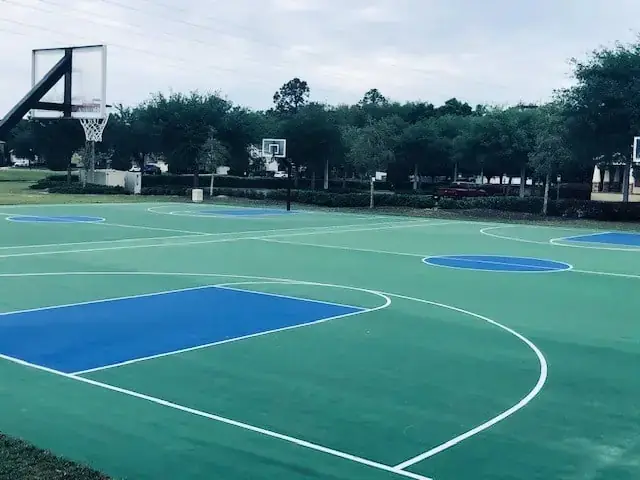
- Basketball courts
- Shuffleboard courts
Dimensions and layouts by sport:
Scope of Work
- 01
Inspection
Cracks, low spots, coating wear, delamination and drainage are checked and documented.
- 02
Cleaning and preparation
Pressure washing and removal of loose or failed coating.
- 03
Crack repair and patching
Cracks are cleaned out and filled. Low spots that hold water are patched and leveled.
- 04
Resurfacer and color coats
New acrylic coats to restore texture, color and consistent ball response.
- 05
Restriping
Existing lines are repainted, or new layouts are added, such as pickleball lines on a tennis court.
Construction Considerations
These decisions have the most effect on cost, schedule and how long the work lasts. We go over them during the site visit.
- How often to resurface
- Most outdoor courts need resurfacing every few years. Use, climate and drainage set the interval. Waiting too long turns a resurfacing job into a repair job.
- Limits of crack repair
- Filling cracks slows them down. It does not fix the base. If a court has widespread structural cracking, we will tell you whether resurfacing is worth doing or whether the court should be rebuilt.
- Weather
- Acrylic coatings need dry weather and suitable temperatures to cure. Work is scheduled around the forecast.
- Adding pickleball lines
- Resurfacing is the least expensive time to add pickleball lines, since the court is being restriped anyway.
Frequently Asked Questions
See also the general FAQ.
How do I know if a court needs resurfacing or rebuilding?
Faded color, slick areas and minor cracks usually mean resurfacing. Widespread cracking, heaving or a base that is breaking apart can mean reconstruction. A site visit will tell you which.
How long does resurfacing take?
It depends on the number of courts, the amount of repair and the weather. The proposal includes a schedule so you can plan closures and notify players or residents.
Can the court colors be changed?
Yes. New color coats can be any color. You can try combinations in the Court Color Planner and attach the design to your quote request.
Request a Project Quote
Send the project location, facility type and timing. We will follow up to schedule a site visit.